Polygons Edges/Vertices
| Name of polygon | Number of edges and vertices |
|---|---|
| Triangle | 3 edges and vertices |
| Quadrilateral | 4 edges and vertices |
| Pentagon | 5 edges and vertices |
| Hexagon | 6 edges and vertices |
| Heptagon | 7 edges and vertices |
| Octogon | 8 edges and vertices |
| Nonagon | 9 edges and vertices |
| Decagon | 10 edges and vertices |
| Hendecagon/Undecagon | 11 edges and vertices |
| Dodecagon | 12 edges and vertices |
| Tridecagon | 13 edges and vertices |
| Tetradecagon/Tetrakaidecagon | 14 edges and vertices |
| Pentadecagon/Pentakaidecagon | 15 edges and vertices |
| Hexadecagon/Hexakaidecagon | 16 edges and vertices |
| Heptadecagon | 17 edges and vertices |
| Octadecagon/Octakaidecagon | 18 edges and vertices |
| Enneadecagon/Enneakaidecagon | 19 edges and vertices |
| Icosagon | 20 edges and vertices |
Sum of all Internal Angles in a Polygon
Sum of all Angles = (n-2)*180
n=number of sides
| Shape | Sum of Angles |
|---|---|
| Triangle | 180 |
| Quadrilateral | 360 |
| Pentagon | 540 |
| Hexagon | 720 |
| Heptagon | 900 |
| Octagon | 1080 |
| Nonagon | 1260 |
| Decagon | 1440 |
| Undecagon | 1620 |
| Dodecagon | 1800 |
| Tridecagon | 1980 |
| Tetradecagon | 2160 |
| Pentadecagon | 2340 |
| Hexadecagon | 2520 |
| Heptadecagon | 2700 |
| Octadecagon | 2880 |
| Enneadecagon | 3060 |
| Icosagon | 3240 |
Polygon Area for most Common Shapes
b=base
l= length
w=width
h=height
a=side
b1=base #1
d1=diagonal #1
sqrt()= square root of number in parenthesis
| Shape | Formula |
|---|---|
| Triangles | b*h/2 |
| Rectangle/square | l*w |
| Rhombus | d1*d2/2 |
| Trapezoid | (b1+b2)*h |
Area of a Hexagon Equation-

Area of a Pentagon Equation and Explanation-

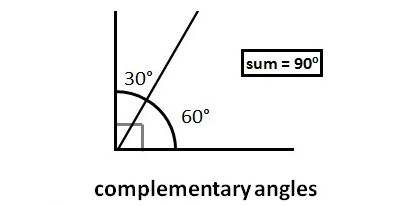
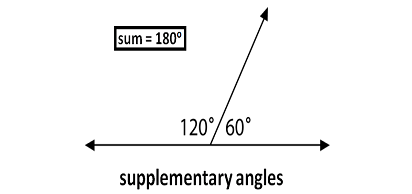
Complementary and Supplementary Angles
A complementary angle is made when the given angle is subtracted by 90 degrees.
A supplementary angle is made when the given angle is subtracted by 180 degrees.
x=given value
Complementary formula=90-x
Supplementary formula=180-x
Create Your Own Website With Webador